


1855
The people of the time felt like pioneers no longer. The log cabin had been replaced with a three room framed house and although the horses still led a wooden plow, money was being set aside for a steel one. Today though, horses were to be used for leisure. Literacy was important to the parents and the opportunity to challenge their mind was available through the library. They gathered shawls and books and set off.
The librarian was waiting and unloading the requested books from his horse. The family arrives to pick up Moby Dick in place of Uncle Tom’s Cabin, a McGruffy Reader to continue the children’s education, and the added surprise of a new book by Walt Whitman entitled Leaves of Grass. The family’s horse trotted a little faster going back to the house. Chores, supper, and then finally journeys into other worlds through the light of the fire.
The importance of libraries was recognized with Indiana’s constitution in 1816, which stated that when a new county was established at least 10% of proceeds from lots for homes were to be reserved for a public library. With these funds a library was established in Allen County in 1850. The county was divided into townships who took ownership. Patrons and the librarian met at the Center of Exchange. The Wayne Township library was active until it was closed in 1893.
1895
Picture this—it's 8pm on a cold night in January and a crowd has gathered in the council chamber of the Fort Wayne City building for the reception for the City Library. Mayor Oakley said the library was needed for the “citizen’s popular discontent and thirst for knowledge” which would be satiated at the opening at 10am the next morning. The township library system lost its efficiency and in 1888 the Indiana legislature passed a bill stating that each city of over 10,000 could establish a library under the guidance of the School trustees. Although Fort Wayne had a population of 40,000, several attempts failed until the persistence of the Woman’s Club League along with a petition from hundreds of citizens and support of the Board of School Trustees convinced the city council to levy a library tax. It opened with 3,606 volumes of books and periodicals. Any citizen over 10 years of age could obtain a card for a $3.00 deposit. Books, with the exception of reference volumes were loaned for two weeks and the option of one renewal and a daily 3 cent late fee. If a household caught a contagious disease while in possession of the book it was destroyed and loss absorbed by the library. A gentleman in the back of the crowd was remembering the ending of the Jungle Book by Rudyard Kipling as the second volume was waiting for him along with the Adventures of Sherlock Holmes by Sir Aurthur Conan Doyle.
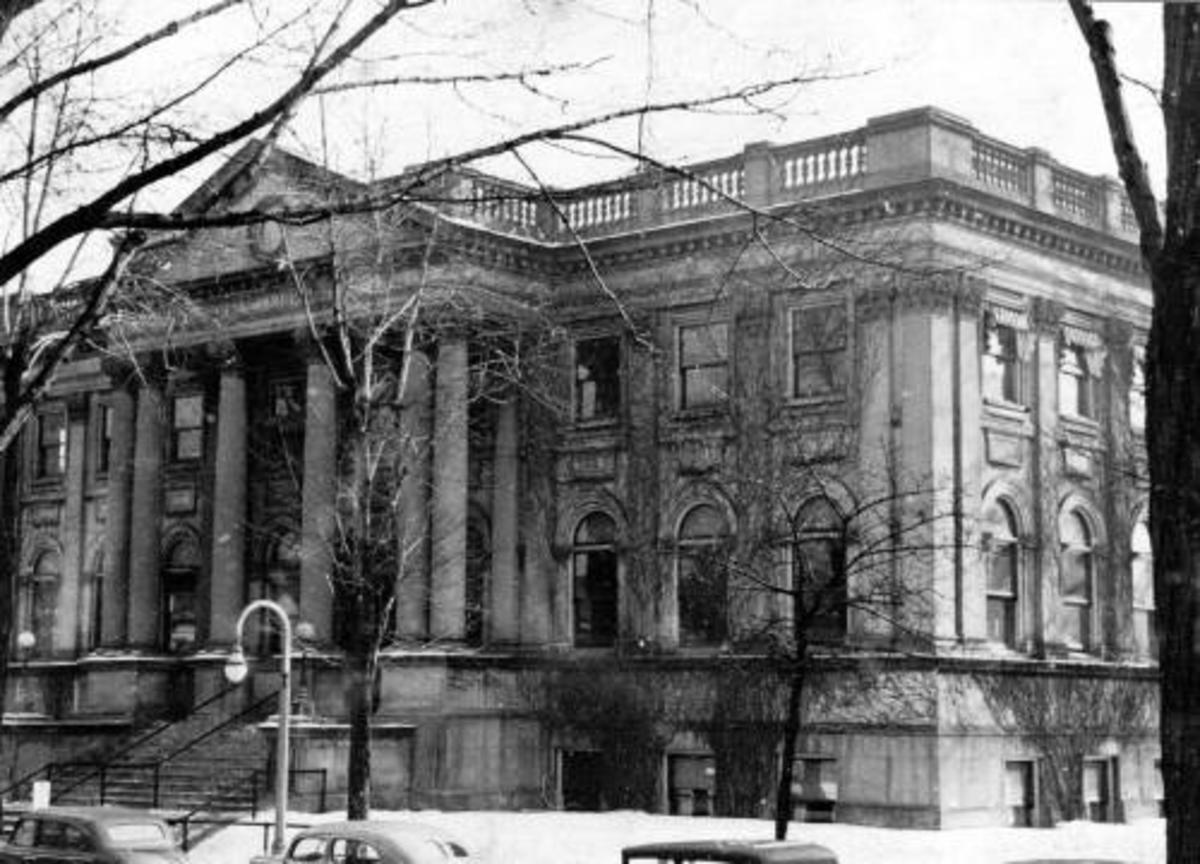
Photo credit courtesy of the Allen County Public Library
1908
The six giant pillars, stained glass rotunda, oak railings, large windows and steps of Italian marble kept the children solemn until they entered the children’s room. There they gave way to gaiety with shelves of books, child size tables and chairs, toys, and storytime! And if you could sign your name you got your own card. What a wonderful trip to the Carnegie library building!
Popularity of the library had outgrown the city building and after several moves the Woman’s Club League again took charge and wrote a letter to Andrew Carnegie asking for money. The philanthropist supported libraries throughout the world and with stipulations he donated $90,000. Years earlier he had taken notice of the small town when traveling through on the railroad and was impressed that Fort Wayne had grown to a population of 45,000. A Grecian style building was erected and dedicated on June 7, 1904. The building heralded steam heat, electricity, indoor toilet rooms and separate areas for children and Indiana Collection. The library housed 17,510 volumes and was open for 12 hours, six days a week. Patrons could also find their own books as opposed to being retrieved from a finding list.
A girl searches until she finds the spine which reads The Wizard of Oz by Frank M Baum and settles in comfortably on the floor for a wonderful adventure.
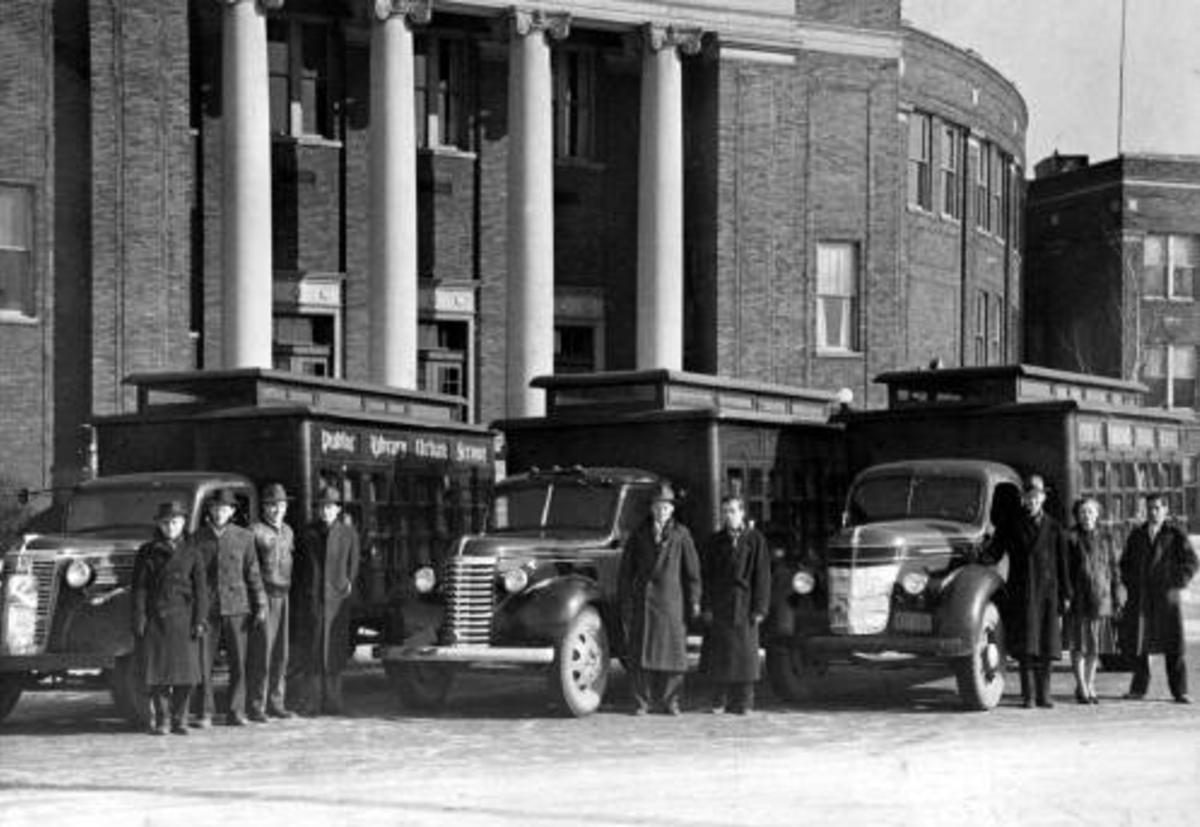
Photo credit courtesy of the Allen County Public Library
1932
It wasn't as much fun coming to town as it used to be. Only necessities were purchased and stores previously entered were passed by with longing looks from the children. Further down the block though was the best part of the week. The family was going to the library! During the early 1900’s library services expanded. Outreach efforts included deposits (exchange sites) for books in factories, hospitals and playgrounds, access for county residents and establishment of “packaged library rooms” in schools. Some of these deposit stations became permanent branches, the first opening in 1907. A reader’s advisory service and later a reference department opened in 1920. Multiple copies of books could be rented out for 2 cents a day. Vacation loans were given from June 1st to Sept 15th and a “Good Books Diploma” program started for children. The Depression curtailed many of these services however along with reduced hours and staffing. Usage of the library greatly increased though with 35,000 visitors in 1932 and a bookmobile carrying 1,000 volumes serviced those unable to get to town. To replace books, library staff sought books from second hand shops and rebound them for usage.
The children scuttle inside to reread a Tin Tin cartoon and well worn Little House on the Prairie book while the parents look through an outdated but still interesting National Geographic and Good Housekeeping magazine. And with this, they felt rich.
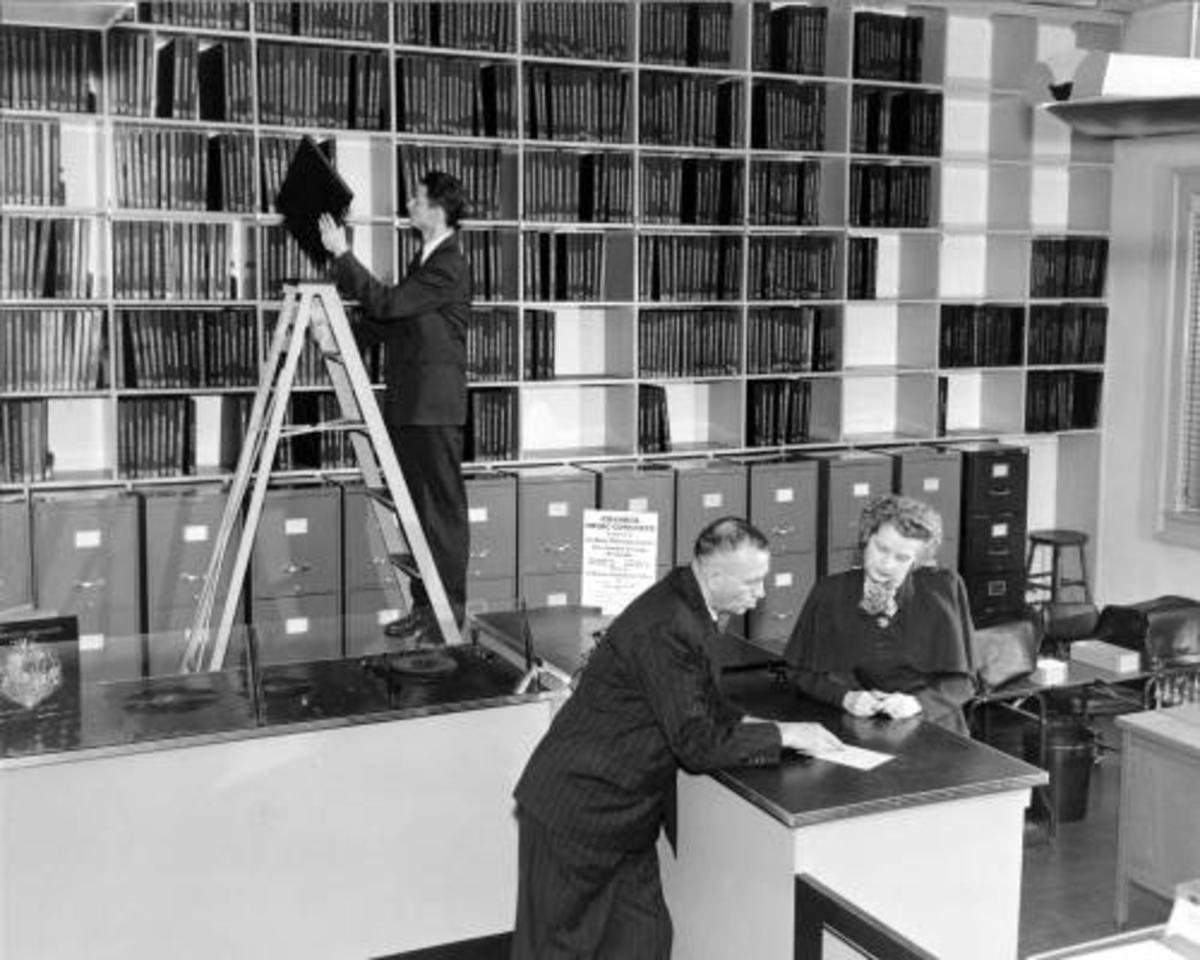
Photo credit courtesy of the Allen County Public Library
1968
The new library building had opened in 1968 as the Carnegie building designed for 40,000 patrons was now serving 250,000 and in poor structural condition. As the secretary walked up the stairs to the fine arts department she appreciated its sleek and modern look. She was choosing a different picture for the office. Framed prints were on loan for two months and it took some time to find one as there were over 1,000 available for loan.
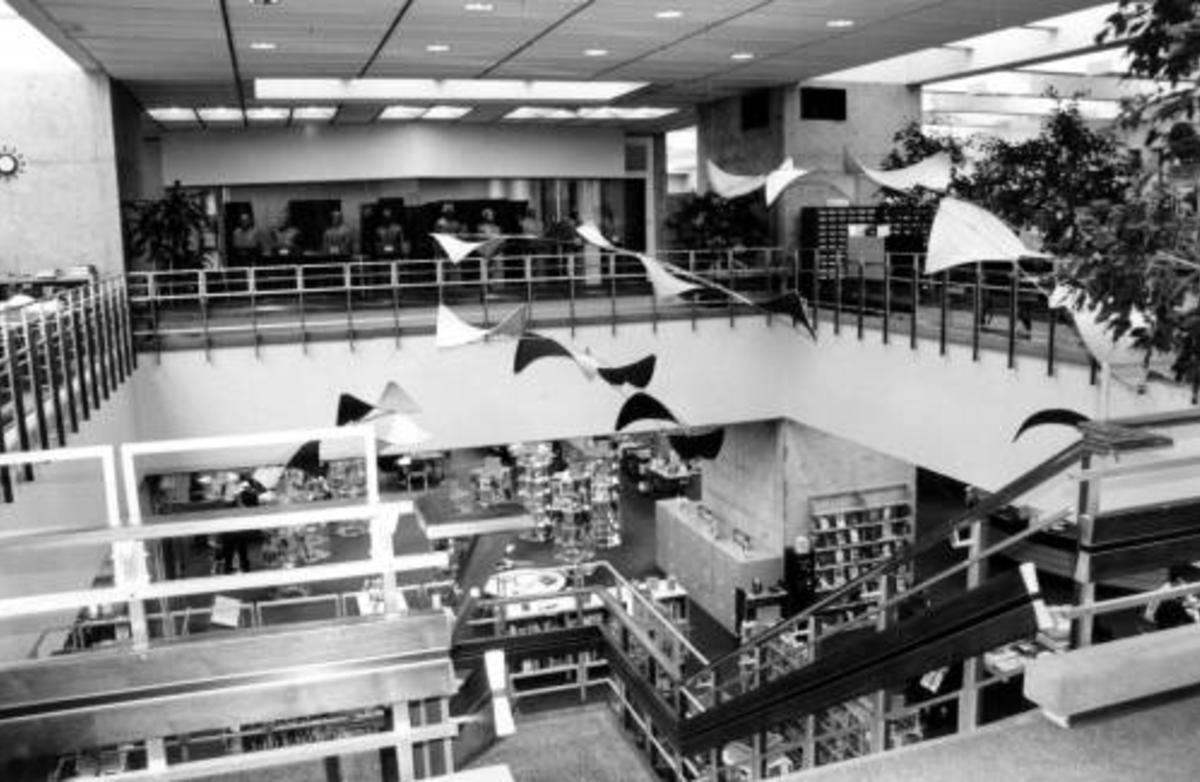
Photo credit courtesy of the Allen County Public Library
Following the Depression and to meet demands of increased patronage the library’s services had bloomed. A phonograph room was added in 1948 followed by two soundproof rooms for listening to music. These became a popular place to bring a date as there was no cost. A carpentry and printing shop opened in the 1950’s. A fleet of vehicles operated 5 routes for bookmobiles and branches continued to be built. Along with books and periodicals, phonograph records, microfilms, viewmaster reels, government documents, and mounted pictures were on
loan. A young adult room with capacity for 250 was opened in 1950 as it was decided that “mixing teenagers with adult mature patrons is like mixing oil and water.” There was regular programming for children and activities for the community.
The secretary stops in the phonograph room and picks up the latest Beach Boys and Beatles album. It was going to be a fun evening.
Present day
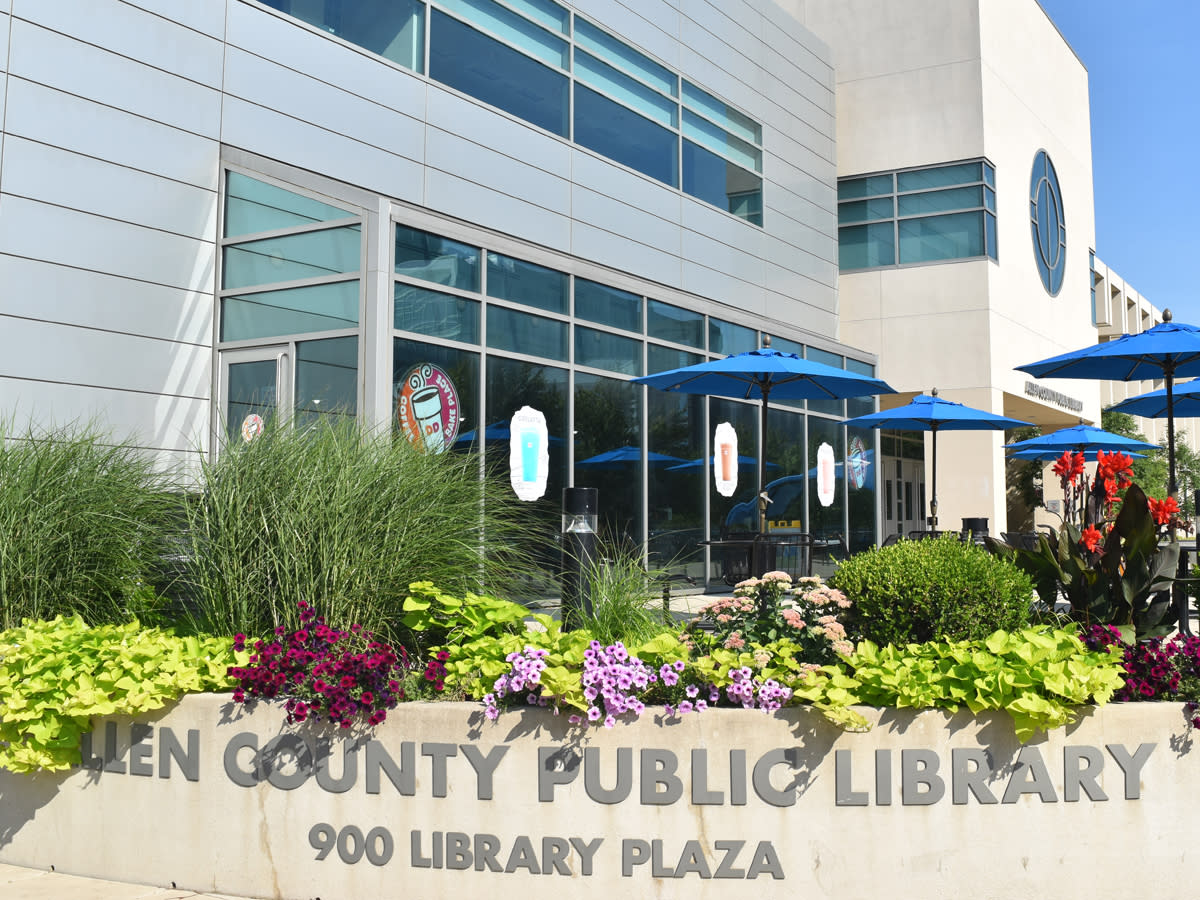
Over the years the Allen County Public Library has followed and often trail blazed changes in society. An addition was added to the building in 1991 and extensive renovations in 2004. Along with
library services the 366,000 square foot building also contains a 239 seat theater, art gallery, and is the home to the Rolland Center for Lincoln Research. This world renowned museum contains
original documents, photos, and written artifacts pertaining to Abraham Lincoln.
There are 14 branches, maker labs, extensive programming, and community services within the library's programming.

The Genealogy Center was started at the bequest of Daughters of the American Revolution. Today it is the largest public family research center in the United States containing more than 1 million items. Access is free for all and staffed with experts in genealogy and history. Classes and seminars are regularly offered.
Come wander through the stacks, read a book, listen to music, make something, discover your history, and enjoy the library as so many have before you.


