


The History
Year 1850
A store-owner-family’s routine was determined by the sound of the tin horn, causing activities centered towards inventory, presentation, and advertisement. By the time they could hear the clip clop of mule’s hooves the store was open and ready for customers. A canal boat was coming!
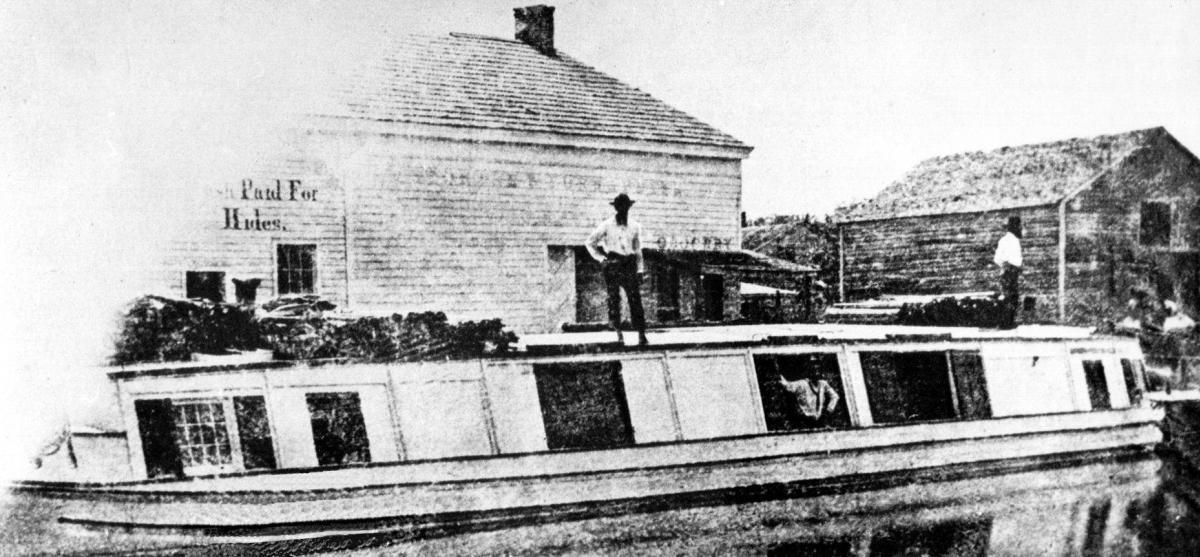 Photo credit: Allen County Public Library
The children got their first look and ran back inside with the news that it was a Line Boat not a packet or freight boat. The Packet was designed for passengers and mail, containing sometimes elaborate sleeping and dining quarters which served meals. A Freight Boat hauled only goods, but the Line boats hauled goods and passengers who had to provide their own bedding and food, thus more business for the store. Fare was 2 ½ cents per mile. The store was strategically located near a lock so there was plenty of time for passengers and crew to make purchases while the boat waited to be “locked” to a higher water elevation. The mules stomped their hooves and the boy ran down to pet them. They had pulled their 10 miles and would be replaced so they could rest. Mules and horses were the power of the canal. Two to six were attached to a boat with a towline and plodded alongside on the towpath, moving between 2 and 8 mph.

Photo credit: Allen County Public Library
Passengers in the line boat included a family coming from Germany to live with their kin in Fort Wayne. Because the canal provided inland access, Fort Wayne experienced a large immigrant population. The store sold practical goods and little flummadiddle or useless things. While the parents refilled their supplies including coffee for 80 cents per pound, a loaf of bread for 1 cent, eggs for 10 cents per dozen, and bags of mystery (sausages) for lunch, the children flew kites and played checkers.
The crew of the boat spent time eating lunch and also cleaning their boat while checking for damages. Boats on the canal were privately owned by individuals or companies and there was great pride in each vessel. Boats were often painted in bright colors, sometimes matching the harnesses of the mules or horses. The boat was hauling corn, wheat, and whiskey.
While eating lunch the husband told the store owner that he found the canal impressive and asked how it was built. Construction of the Canal was an architectural marvel. First a dam was built along the river to control the water. Then a small feeder canal brought the water to the main canal. After the trees were cleared, the earth was dug with only shovels, pick axes, wheelbarrows, and a horse drawn scoop slip. The main canal was 40 to 60 feet across and four feet deep. The Wabash Erie Canal extended 428 miles. A lock system was needed to move the vessels through different elevations. Culverts were dug when the canal passed over a stream and aqueducts built for crossing a large river. Engineers and skilled workmen were hired to design and build these structures. To find the necessary, large labor force for digging, advertisements went as far as New York offering $10.00 per month. Over 1,000 men came to the Fort Wayne area. Most were of Irish origin.
The store owner said that while the canal was being dug the children were prohibited from getting close. The work was dangerous and swampy land proved a breeding ground for malaria and cholera. It is estimated that one man died for every six feet dug. To encourage the men, each crew had a jigger boss, whose job was to liberally distribute “red-eye” whiskey. Factions among the Irish caused disputes and brawling with such severity that it surprised the Miami, a Native American tribe sharing the land, and the military had been called out to keep order. The children did, however, enjoy the stories told at the store and a collection of mastodon fossils which were sometimes found and traded for goods. Everyone was in awe when boats of soldiers on their way to the Mexican War came through in 1845.
The two women talked of how to protect from the hoards of mosquitoes that often plagued travelers but also the adventures waiting in Fort Wayne. The store owner’s wife shared the experience of attending the official dedication or “jollification’” of the canal on July 4, 1843. The day of the dedication dawned with cannon fire, a mile long parade, bands, speeches, and a meal at the Sweeny homestead for 20,000 people.
Fort Wayne is built at the confluence of the St. Joe and St. Mary’s Rivers, which is headwater to the Maumee, which in turn connects to Lake Erie. Fort Wayne is also the highest elevation of the three rivers giving Fort Wayne the nickname “Summit City”. With this location the groundbreaking and dedication of the canal was held in Fort Wayne. What had been a frontier trading post of 300 people at the start of construction was now a thriving community of approximately 4,000 residents. There were times when up to 40 boats lined up on the dock to unload, fill the warehouses, and sell their goods. Fort Wayne was incorporated as a town with taverns, hotels, stores, churches, schools, a library, and art exhibits. Fort Wayne was a proud city and a reception committee met every guest at the wharves or roads into town and directed them to a place to stay in the home of a resident.
Once the boat was moved to a higher elevation, the passengers embarked with new provisions and good wishes and the vessel continued on its journey. The family store would continue to maintain sales until 1857, when the golden age of the canal began to wane. Railroads which were faster and more reliable were introduced in 1856. Due to Indiana winters the canal could only run 8 months out of the year. Erosion, floods, storms, and decay of wooden beams in the structures led to repairs that were costly and time consuming. Canal use lessened and the last boat traveled in 1882. The land was sold in parcels, often filled in, or used as drainage ditches.
Present Time
Today, finding evidence of the canal is a true adventure discovery. Stone piles from culverts, large wooden beams, ditches, and towpaths are most of what remains. An interesting driving tour of the canal path through Allen County can be found here.
The only remaining structure is The Canal House located at 114 E. Superior, now the oldest building in Fort Wayne. The stone structure built in 1852 was an office and storehouse. Fort Wayne celebrates its canal history through revitalization of the landing wharf where boats docked and warehouses stood. Today The Landing provides restaurants, shopping, a full schedule of outdoor entertainment, and a lovely starting point to take a stroll through Promenade Park and the historic parts of Fort Wayne.
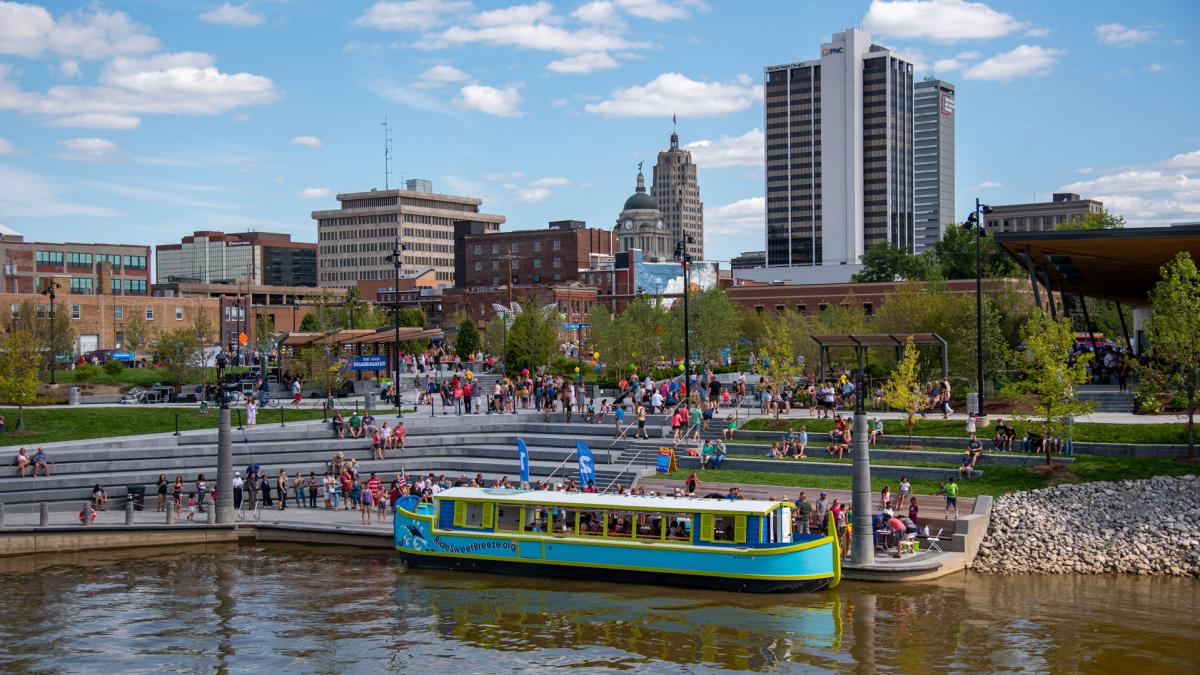
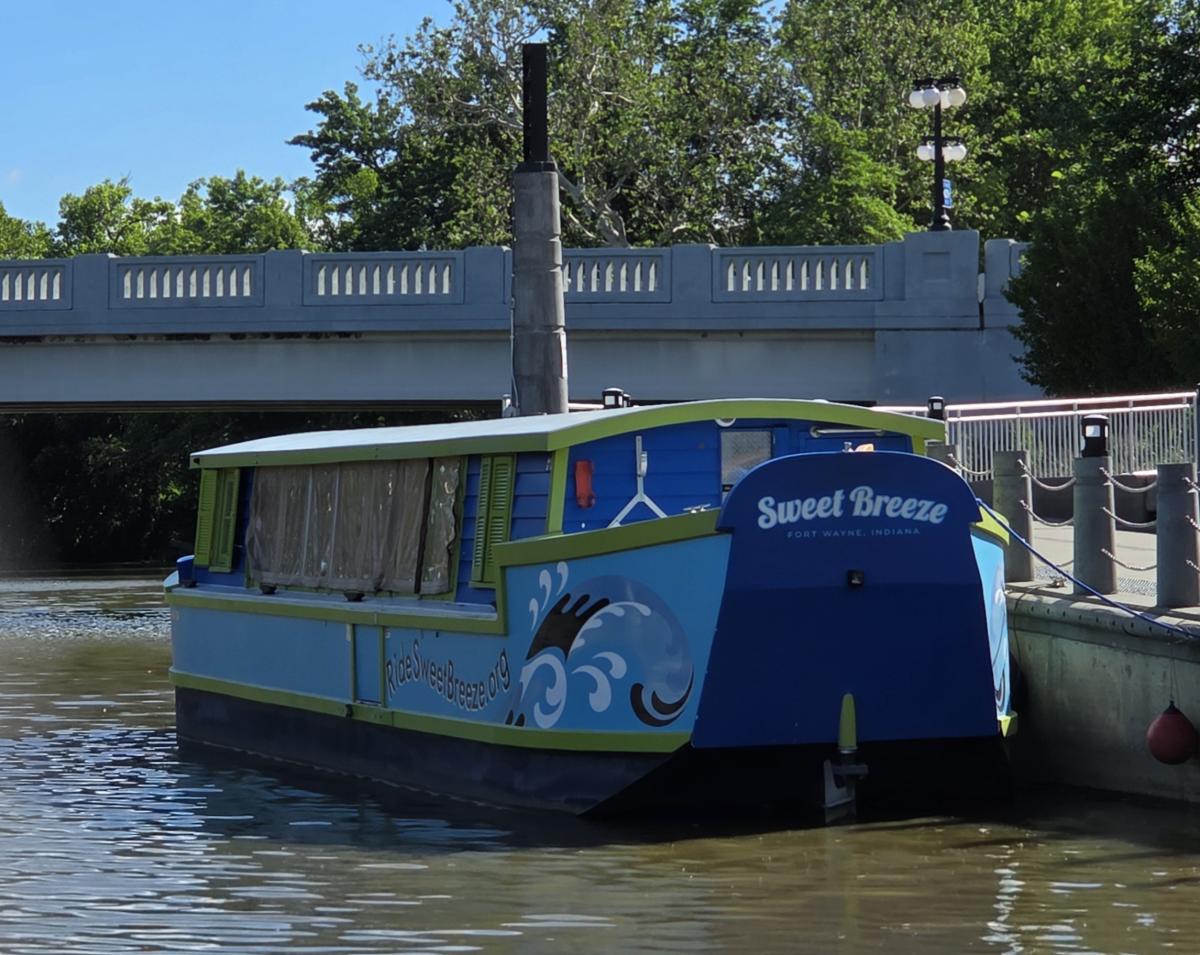
Sweet Breeze is a replicated canal boat which will take you for a ride on the rivers. These 45, 60, or 90-minute tours provide a unique perspective of Fort Wayne which would have been seen by a canal traveler. Sweet Breeze takes you into the confluence of the three rivers and a docent shares facts and stories from days past. The boat is also available for field trips and private rentals. Part of the towpath has become part of the river greenway and you can walk, bike, or walk your dog over the mule’s steps from many years ago.
Take time to rediscover the enthusiasm and ingenuity of the Canal days and discover some of the delights of Fort Wayne by taking a Sweet Breeze Canal Boat Tour.


