


It was a warm, sunny morning. The children had been waiting for three hours and now they were impatiently watching the opening ceremonies. Excitement rippled through the crowd from the children to adults. What a way to start the 4th of July weekend! Parents were relieved to spend the day happily distracted from news of the Vietnam War and the children just wanted to see the animals. Finally at 10AM on July 3, 1965, the ribbon snapped and the Fort Wayne Children’s Zoo was open!
The concept of a zoo in Fort Wayne, however, began 40 years prior. In 1925 the Bloomingdale Progressive Club started a movement to establish and maintain a municipal zoological garden. The principal function of this endeavor was education and conservation. “When one, especially the young, becomes acquainted with the beauties of nature and becomes closer associated with the little animals of the great outdoors, the desire to kill and destroy is overcome.” Franke Park was chosen for its natural beauty and design, its position on high ground, and its location 6 blocks from the streetcar line. The Franke Park Wildlife Sanctuary opened in 1928. Mathias Raum, a Fort Wayne resident who had traveled to see other zoos, donated the first animal which was a bear he bought for $200. The next animals were a pair of racoons. The menagerie consisted of mostly native animals and fowl.
In 1952 fifty-four acres were donated to Franke Park. This addition allowed for redesign and now the public could walk through the sanctuary. More than 150 animals could be seen including a peacock, albino pheasants, deer, bear, arctic foxes, and eventually 4 monkeys. A circus wagon was developed in 1955 which brought animals to children who could not come to the sanctuary. Talk of starting a “real children’s zoo” began in 1962. By 1963 the work had begun and on opening day the park consisted of 5 1/2 acres and had 18 animal exhibits.
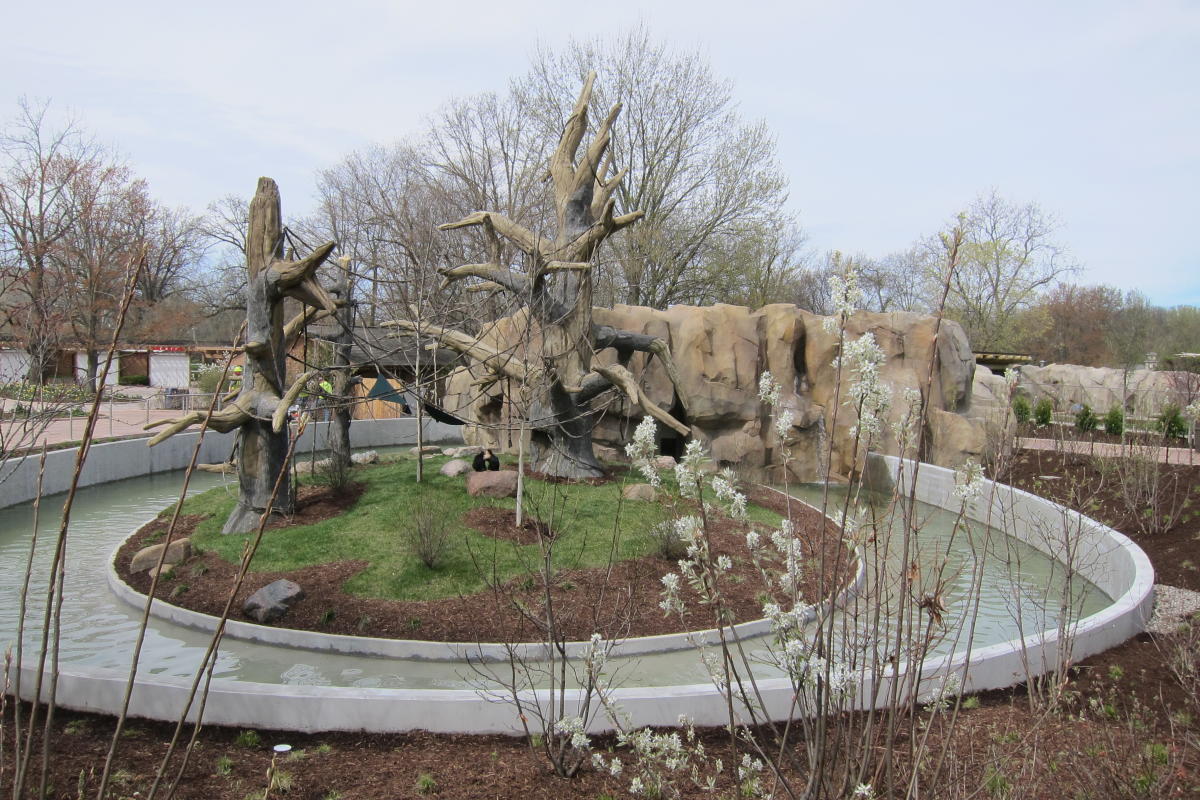
Admission for opening day was 25 cents for adults, 10 cents for children, and children under 1 year were free. After going through the gate, visitors were met by a croaking green frog that talked to them about the zoo. The voice was that of Earl Wells, the first zoo director. Today you can listen to the same green frog telling jokes in the central zoo area. The children sprinted in their Converse and Mary Janes with cries of “groovy” and “peace out”. The first stop was Monkey Island where they watched the primates with pride. Afterall, THEY along with the school children of Fort Wayne had raised the money to build this home for the monkeys. Pride for the zoo was and still is evident as the zoo is one of the few self-supporting zoos in the country, funded entirely through public subscription and private donations. The Fort Wayne Zoo exists because it is wanted and treasured by the people of Fort Wayne!
The children comment that it doesn’t look like a zoo because there are no cages. The monkeys, as most other animals, are kept at bay by a moat and wall. The zoo’s design is that of a zoological park to make the animals more accessible to the public. In fact, it was reported “that the most confined ‘animals’ in the zoo were the small children strapped in their strollers.” The Zoo continues to be an impressive park with lush foliage, waterfalls, and natural designs throughout the experience.
After the monkeys, the Contact Area was the next exhibit to explore. Here children mingled with goats, colts, and small deer. Other animals waiting to be seen included bears, an anteater, sloth, agoutis, iguana, capybaras, a llama, prairie dogs, an owl roost, 2 large tortoises, and a red fox.
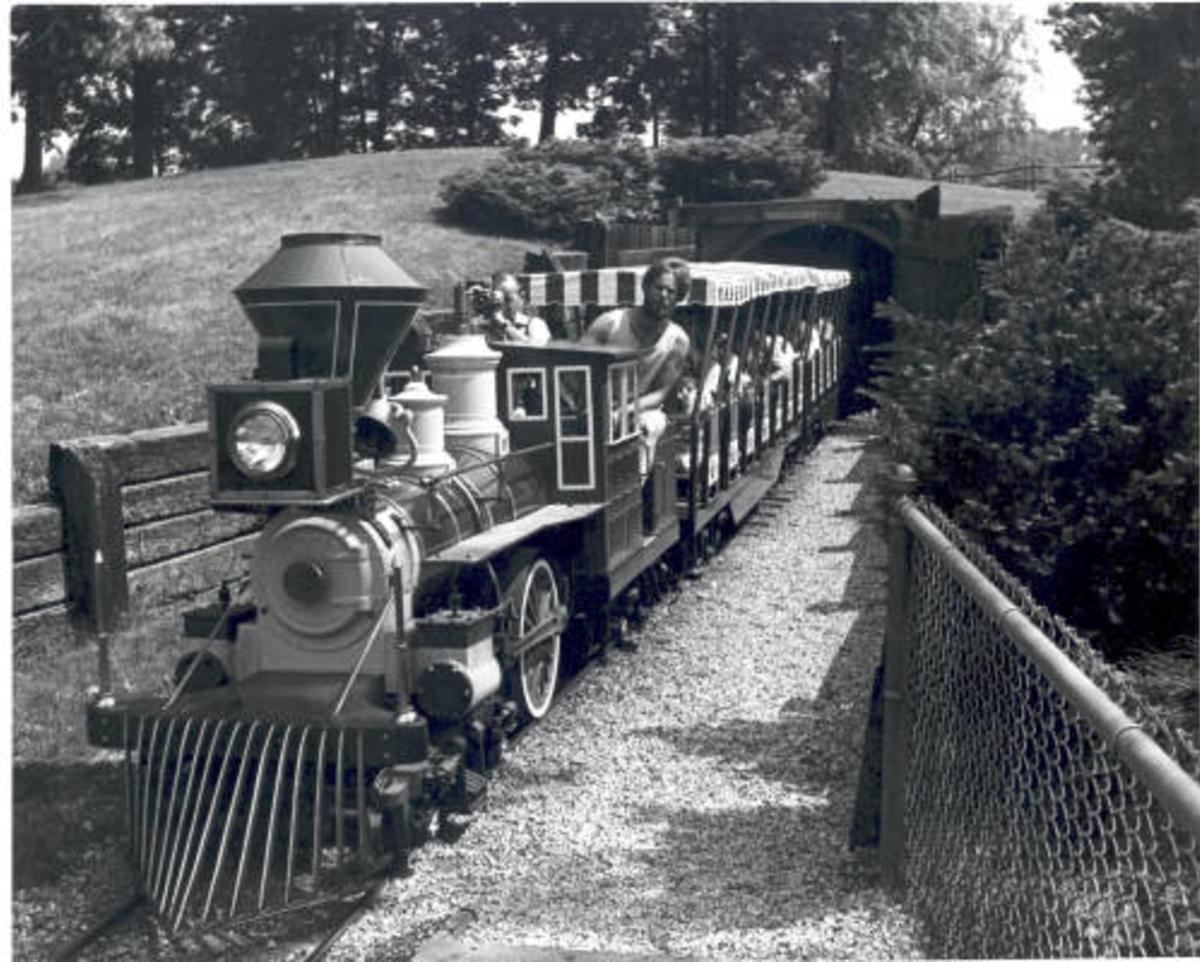
Other areas of interest were a covered patio, hoping to become the spot for birthday parties, a large Mother Goose statue and a child accessible Noah’s Ark tethered in the pond. The longest line however was at the Kuhneville Station with children waiting for their turn on the C.W. Kuhne Express miniature train. Despite a minor accident “at one point the train came steaming out of the tunnel, jumped the tracks and came to rest with its cow catcher bent around a station post” there were no casualties and the ride was a success. The whole day was quite a success with 6,000 visitors.
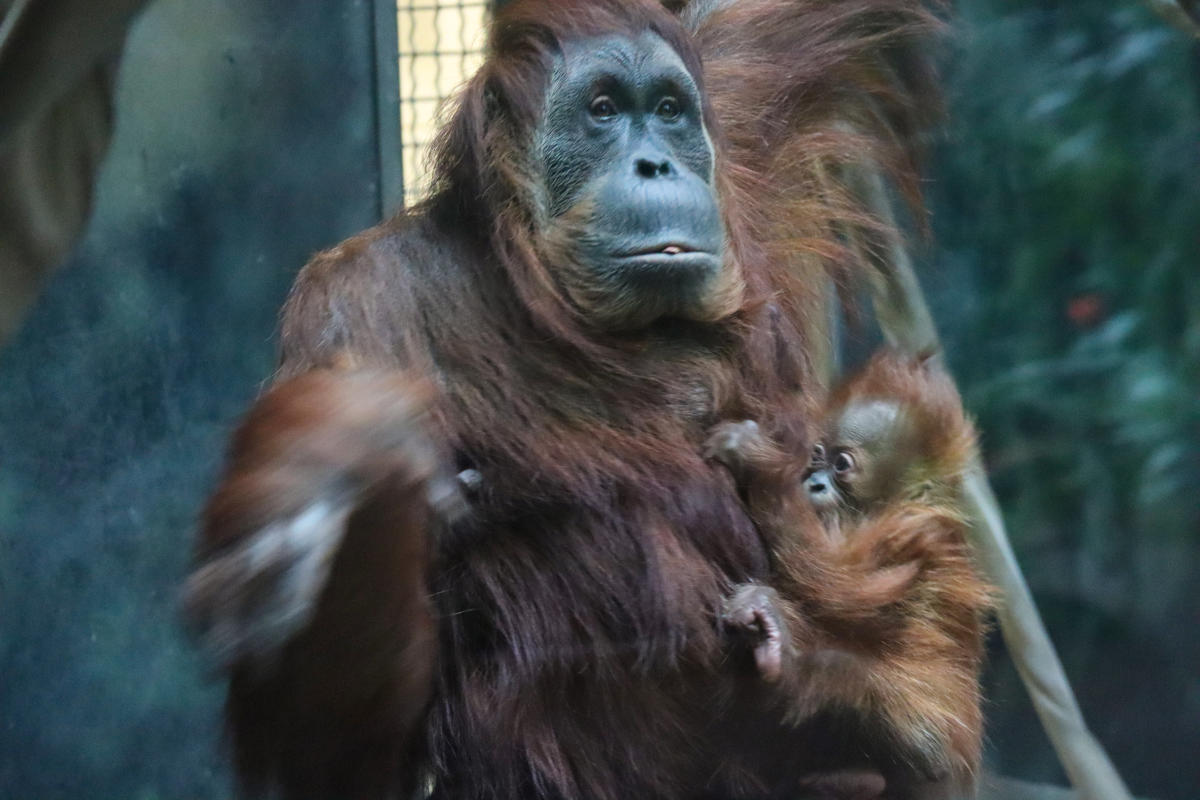
Being a children’s zoo, the idea was to obtain young animals and when they matured, have them transferred to other zoos to be replaced with young ones. This concept was later changed as many animals stayed, some becoming beloved such as Famous Amos, a rare pygmy chimp who enamored the public from 1967 to 1977. Elephants made a presence from 1967 to 1974. The first was obtained through the help of fund-raising children who called themselves “zoo boosters”. Other animals having come through the zoo over the years include flamingos, wallabies, bats, and cheetahs. The Fort Wayne Zoo continues to expand and redefine its animal population often producing their own such as Raya, the new orangutan baby.
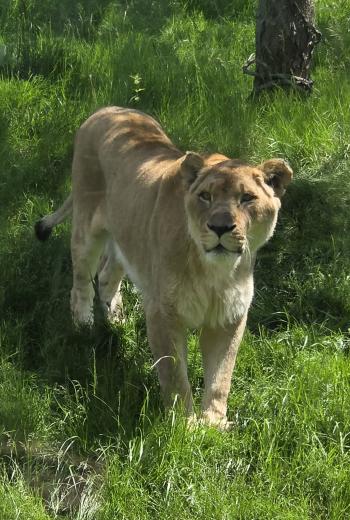
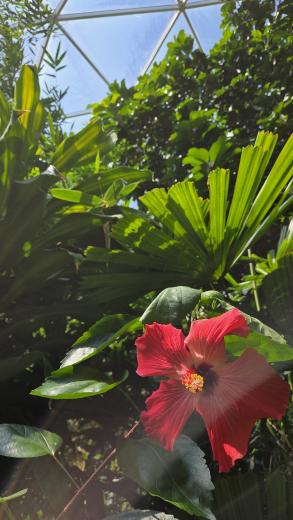
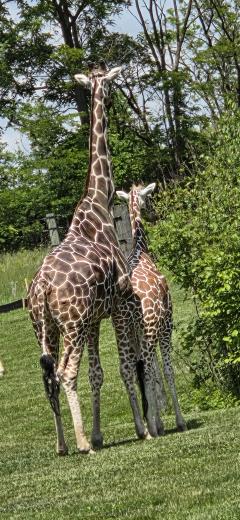
The African Veldt opened in 1976. Designed to be a true safari adventure, the visitors originally took a 12-minute ride in cars through a mixed species 22-acre open pasture. A Discovery Center museum opened in 1983. The Australian Adventure opened in 1987 with the largest group of Australian animals outside of Australia. The years 1994-1996 brought us the Indonesian Rain Forest with the Asian Trek added in 2023 and Coastal Cove in 2025. Other activities, rides, and events continue to evolve bringing new experiences for its visitors. Today the zoo encompasses 47 acres and holds 1,500 animals. In 2026 the name changed from the Fort Wayne Children’s Zoo to the Fort Wayne Zoo. The attractions and inclusion of children has not diminished, but the change in name reflects its appeal to all ages.
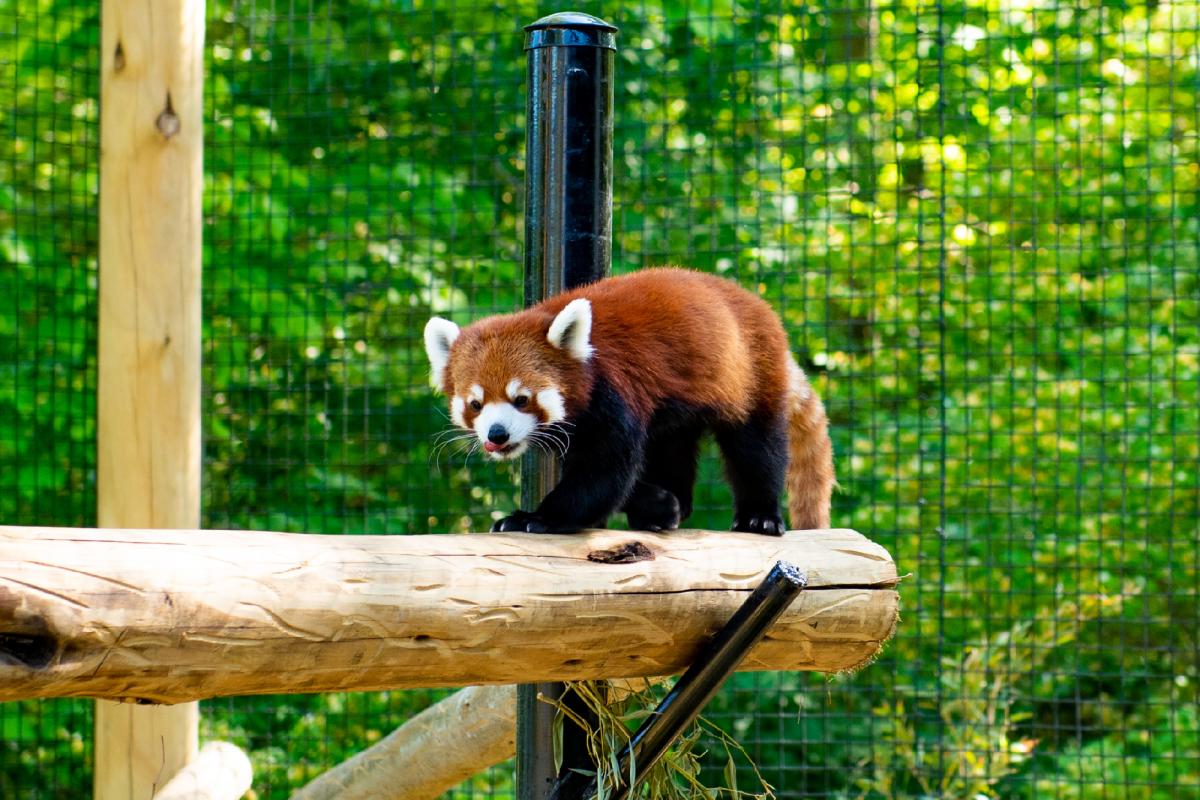
The Fort Wayne Zoo has remained true to its mission of education and conservation. A mobile zoo was established in the early years which took animals to every third-grade class. Today the zoo offers extensive educational programs, camps, and resources for children. The Fort Wayne Zoo is a world-wide leader in conservation, partnering with 33 organizations including protection of Java Gibbons, clouded leopards, orangutans, and Sumatran tigers.
The Fort Wayne Zoo is truly a unique experience. Come and explore or re-introduce yourself to one of Fort Wayne’s treasures. The animals are waiting for you!
Historic Sites
Sign up for the FREE Allen County Historic Sites pass and explore centuries of the rich history around our community.
Fort Wayne Adventure Pass
Four Amazing Attractions. One Low Price


